Between art and craft
Between Art and Craft
The hand remembers similar movements, whether it holds a palette knife or a shoemaker’s knife.
For many years, I designed and made footwear. I did not only draw designs. I worked directly with materials — leather, fabric, adhesive, soles and metal. I cut, sanded, stretched, stitched and shaped them. Materials always offered some kind of resistance, and I had to learn how to work with that resistance.
When I returned to painting after many years, I realised that this memory had never disappeared.
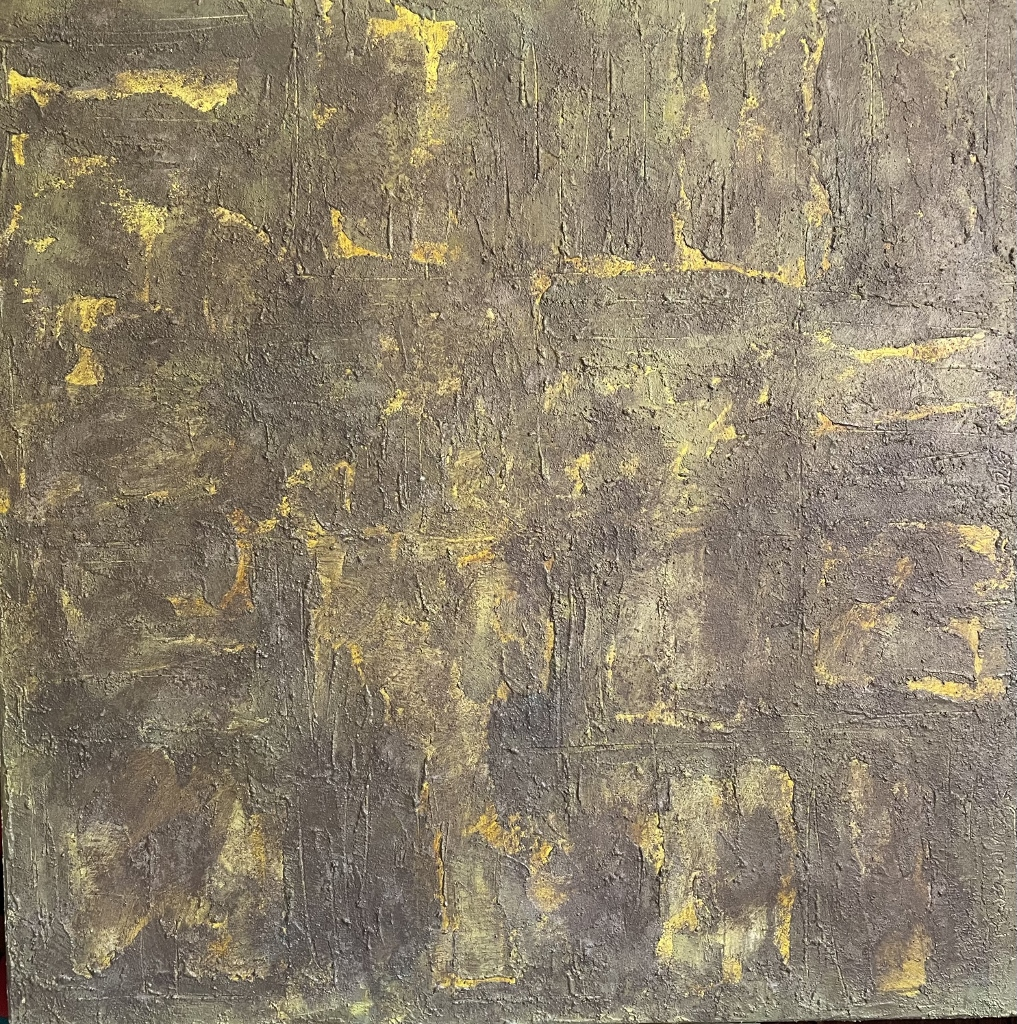
Paint also has its own weight, viscosity and time. It can be applied, removed, dragged, cut into, rubbed away, or left where it has begun to form something on its own. With deep impasto, a painting ceases to be only a surface. It begins to behave, in a sense, like an object.
I do not try to transfer craft directly into painting. I do not paint shoes, nor do I construct paintings according to the principles of footwear design. What has remained is a way of working: attention to material, respect for the tool, and the conviction that the hand is capable of thinking.
Sometimes, only while I am working, I notice that a gesture made with a palette knife resembles a movement I once repeated thousands of times with a knife, a rasp or another tool at the shoemaker’s bench. It is not a conscious quotation. It is more like a memory of movement.
That is why I do not regard the years spent designing and making footwear as a break in my artistic path.
It was another chapter of the same story.
Today, instead of constructing a functional object, I construct a painting. The material is different, and so is the purpose. But the hands are the same.
And they remember.